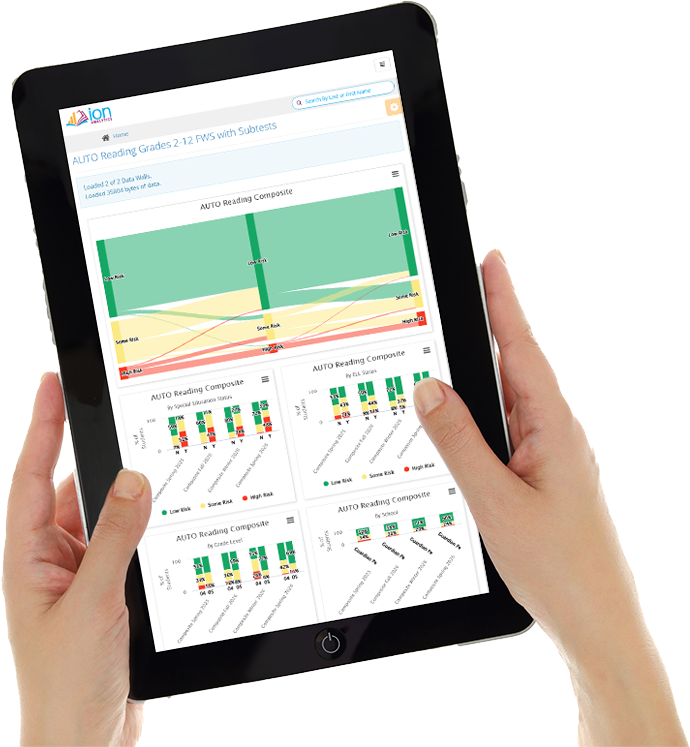
Start With the Big Picture
Dashboards
A Brief often identifies a trend:
- Attendance is declining
- Reading growth has slowed
- Behavior incidents are increasing
- A subgroup is underperforming
Ask: What is happening?
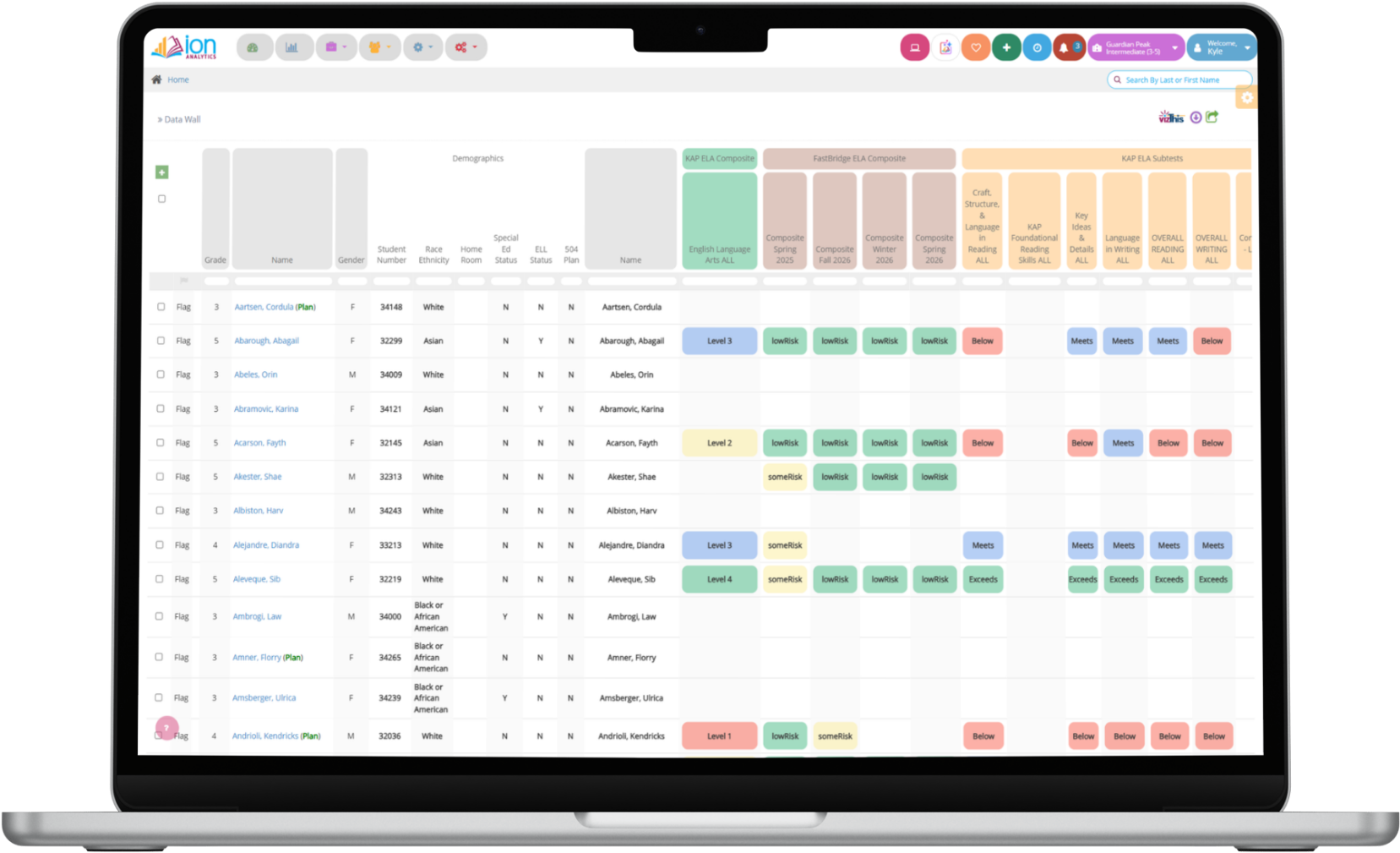
Identify the Students Behind the Numbers
Data Walls
Once you've identified a trend, the next question is:
Which students are driving it?
Data Walls transform summary statistics into actionable student groups.
Filter, sort, and segment students based on attendance, behavior, assessment performance, demographics, interventions,
and hundreds of other variables.
Ask: Who is affected?
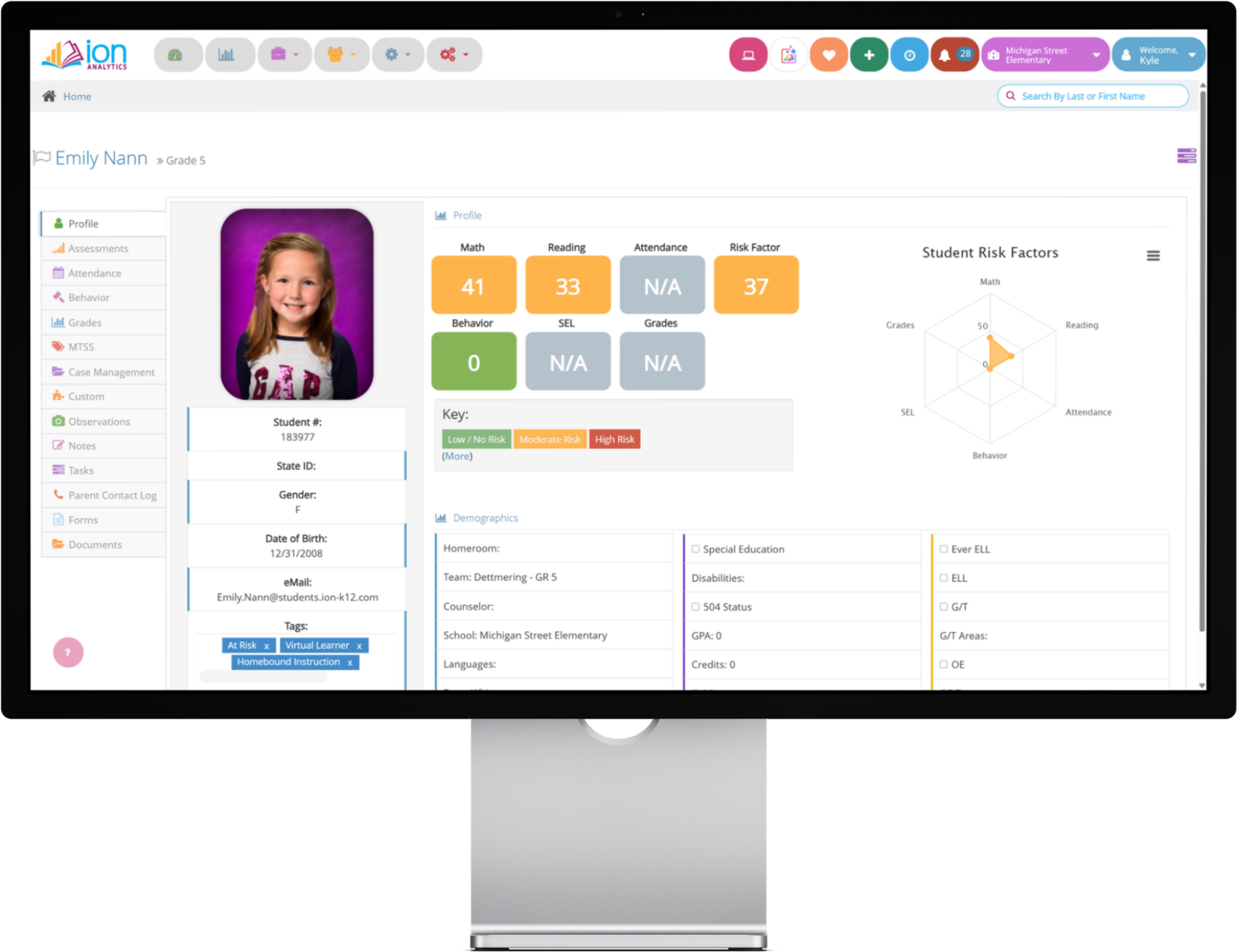
Understand the Full Student Story
Student Profile
Every student has context.
A student struggling with reading may also have attendance challenges.
A student with behavior concerns may have recently transferred schools.
Student Profiles bring together all available information into a single view.
Ask: What is happening with this student?
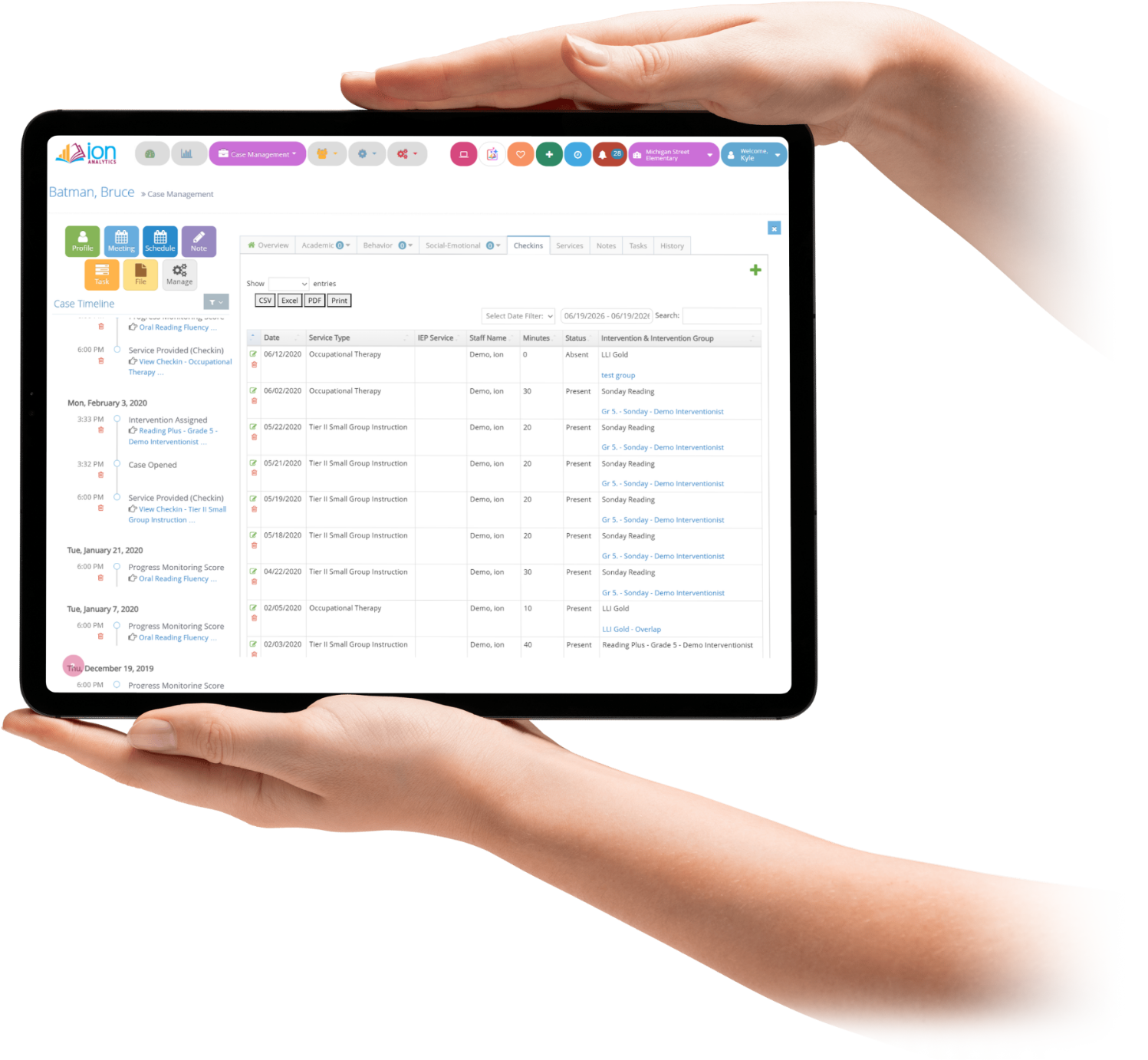
Document the Work
Case Management
Once a need is identified, teams need a place to capture observations, concerns, conversations, and decisions.
Case Management provides a structured process for documenting student support efforts while maintaining a complete
historical record.
Every note, meeting, and decision becomes part of the student's story.
Teams can quickly understand what has been tried, what has changed, and what questions still remain.
Information stays connected as students move between grade levels, schools, and support teams.
Instead of starting over, educators can build on what is already known.
Ask: What have we learned?
Deliver Personalized Support
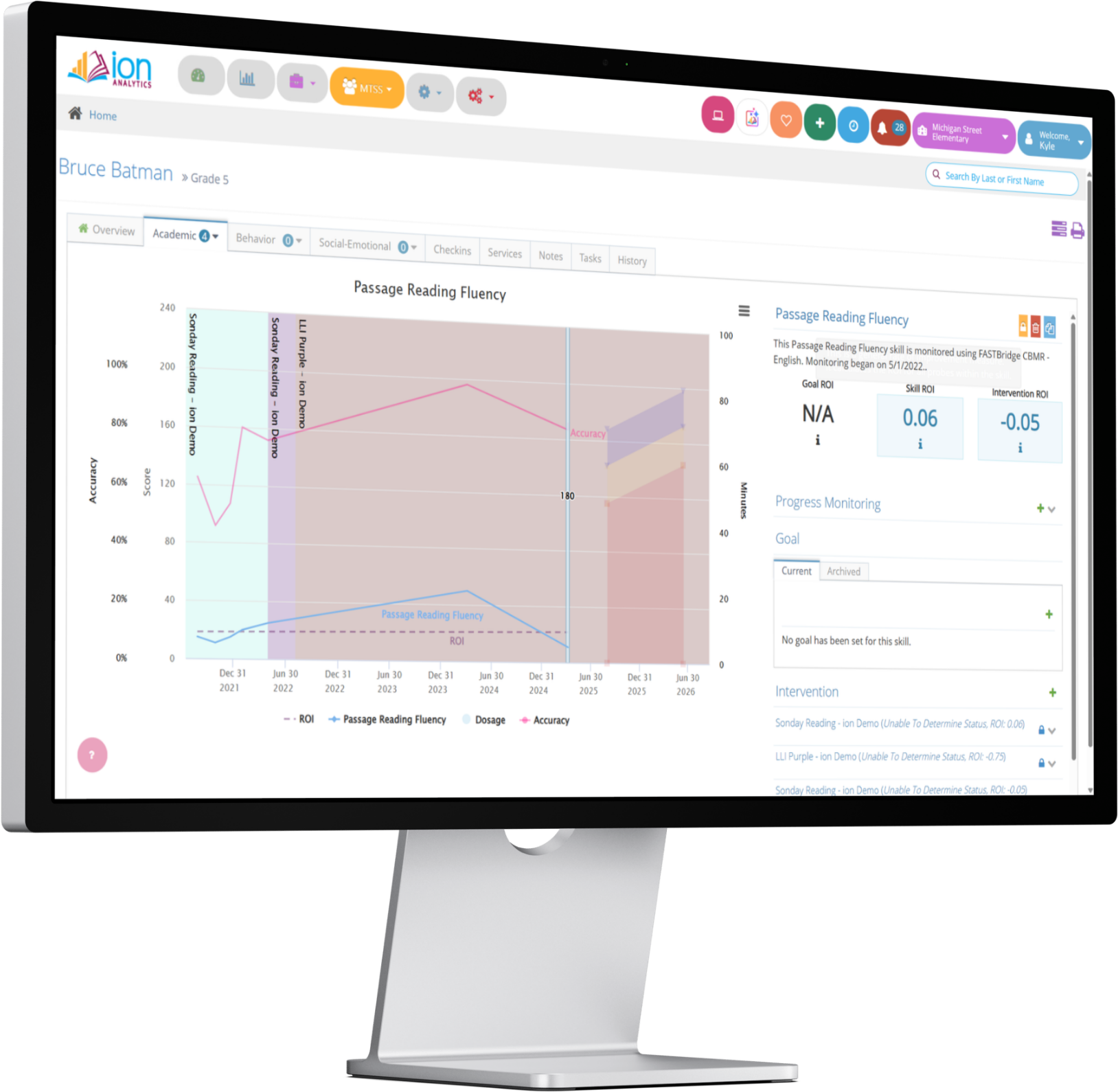
Plans
Insights only matter if they lead to action.
Create individualized plans that clearly define goals, responsibilities, timelines, and progress measures.
Assign interventions aligned to the student's specific needs.
Schedule check-ins and document progress along the way.
Track services provided, monitor outcomes, and maintain accountability across the entire support team.
When a strategy isn't working, teams can adjust course with confidence and clarity.
Every plan creates a roadmap for turning insight into measurable progress.
Ask: What are we going to do?
Provide Support at Scale
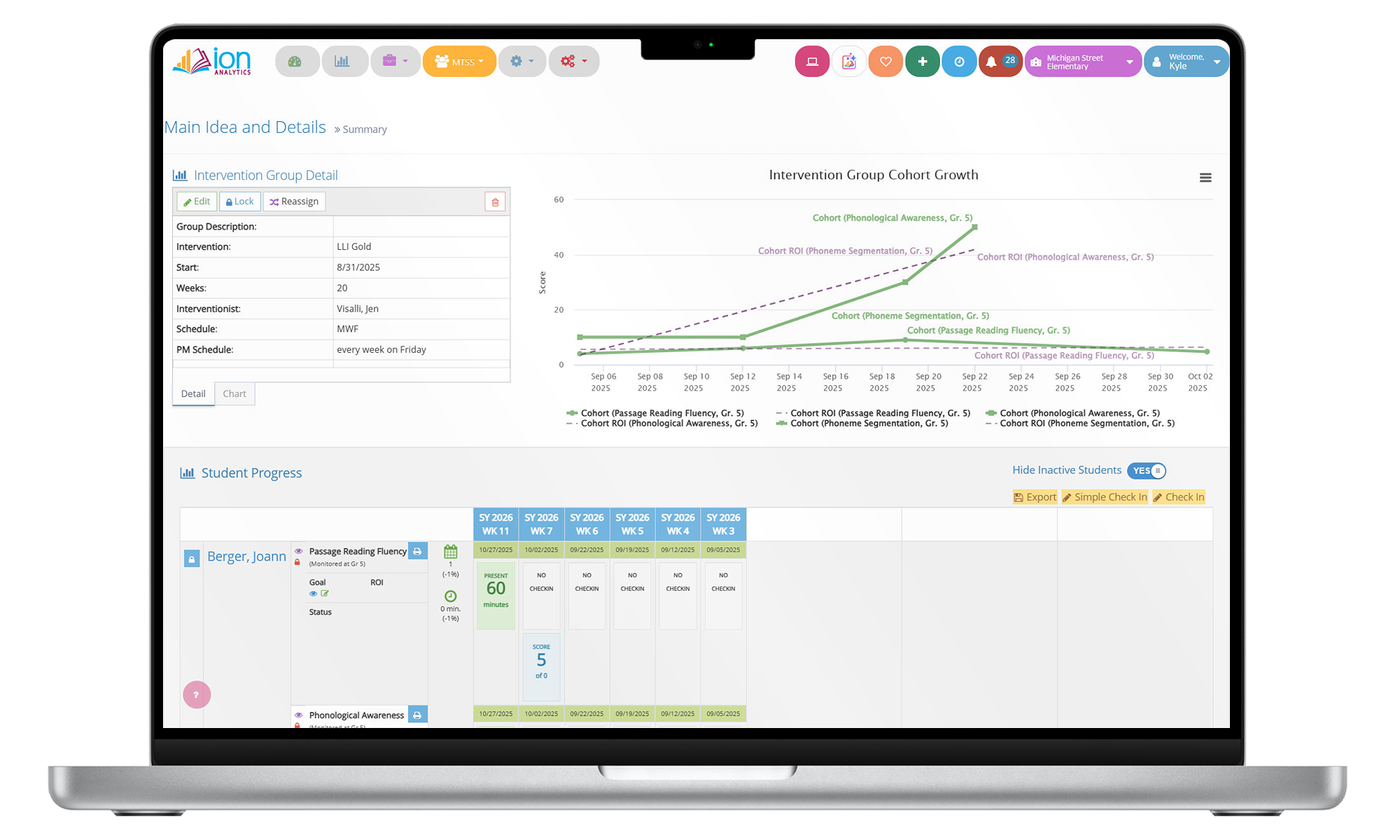
Intervention Groups
Most challenges aren't unique to a single student.
Intervention Groups allow educators to organize students with similar needs, assign supports, monitor participation, and
evaluate effectiveness.
Deliver targeted interventions at scale without sacrificing accountability.
Track who is receiving support, how often services are delivered, and whether students are responding as expected.
Monitor progress across the entire group while still maintaining visibility into individual student outcomes.
Teams can quickly identify successful interventions, uncover implementation gaps, and make informed adjustments.
Every intervention becomes part of a continuous cycle of support, measurement, and improvement.
Ask: How do we support all students who need help?
Collaborate. Iterate. Innovate.
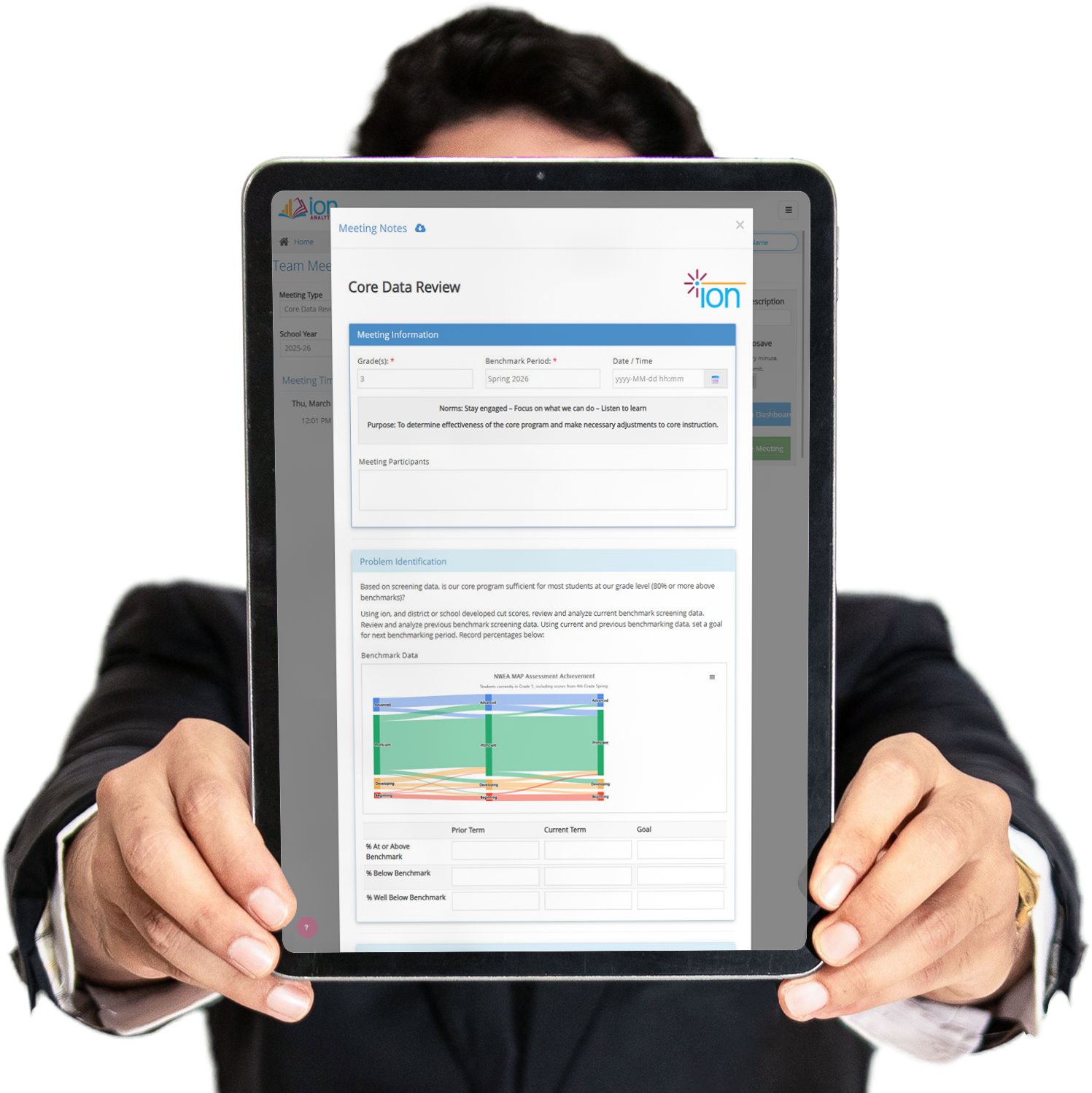
Team Meetings
Student success is a team effort.
Team Meetings provide a structured space for educators to collaborate, review data, document decisions, and track
next
steps.
Set goals, capture meeting notes, assign responsibilities, and ensure every action item has a clear owner.
Bring together dashboards, student profiles, intervention plans, and case history in a single conversation.
Whether you're conducting MTSS meetings, student support teams, PLCs, grade-level reviews, or leadership
discussions,
everyone works from the same information.
Over time, meetings become more than calendar events—they become a documented record of decisions, progress, and
continuous improvement.
Ask: What should we do next?